





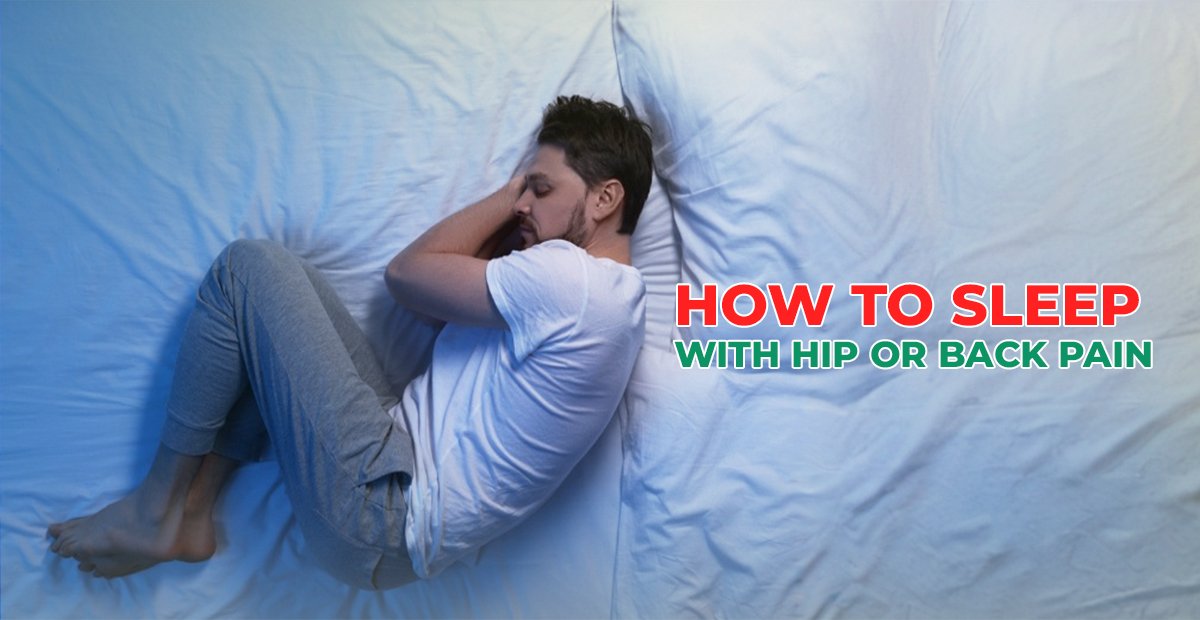
How to Sleep With Hip or Back Pain: Positions That Actually Help
Dr. Madhusudhan NC (Madhuhand Surgery) – Consultant Orthopedic Specialist, Bangalore Baptist Hospital discovers How to Sleep With Hip or Back Pain.
If you’re struggling to fall asleep or waking up repeatedly because of Hip or Back Pain, you’re not alone. Night-time pain is one of the most common reasons patients visit an orthopedic specialist—especially people with sciatica-like symptoms, disc-related back pain, arthritis, muscle spasms, or hip joint stiffness. The good news: changing your sleep position, pillow support, and bedtime routine can reduce pressure on the spine and hip joints, helping you sleep deeper and wake up with less stiffness. In this guide, Dr. Madhusudhan NC—an experienced ortho surgeon at Madhuhand Surgery and a consultant at Bangalore Baptist Hospital—shares practical, medically sound sleeping positions that actually help.
Why Hip or Back Pain Feels Worse at Night
Your body recovers during sleep, but certain positions can irritate joints and compress nerves. Hip or Back Pain can increase at night due to:
- Poor spinal alignment on the mattress
- Tight hip flexors or hamstrings pulling on the lower back
- Pressure on the hip joint (especially with arthritis or bursitis)
- Nerve irritation (like sciatica) made worse by twisting positions
- Inflammation that becomes more noticeable when you’re still
If pain is persistent at Hip or Back Pain, getting evaluated by a trusted bone specialist or orthopedic specialist is essential—because the right diagnosis changes the solution.
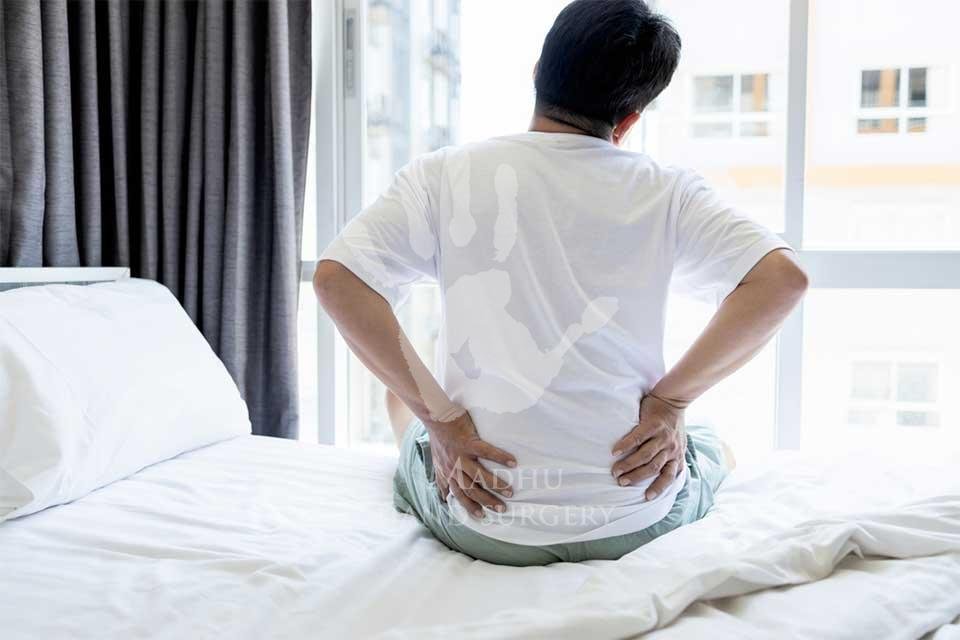
Best Sleeping Positions for Hip or Back Pain (Doctor-Recommended)
1) Sleep on Your Side with a Pillow Between Your Knees
This is one of the most effective positions for Hip/Back Pain, because it keeps your pelvis neutral and reduces strain on the lower spine.
How to do it:
- Lie on your side (left or right).
- Place a firm pillow between your knees.
- Keep your legs slightly bent and your shoulders stacked.
Best for: lower back pain, hip arthritis, SI joint pain, pregnancy-related back pain.
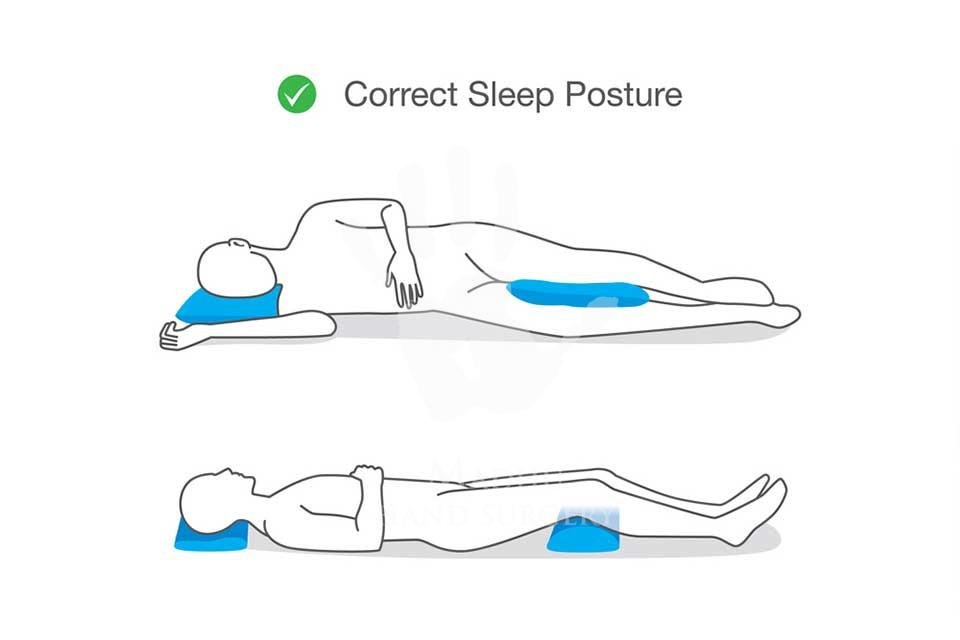
2) Sleep on Your Back with a Pillow Under Your Knees
Back sleeping can be excellent for spinal alignment—if you support the knees.
How it helps:
A pillow under the knees slightly flexes the hips and reduces pressure on the lumbar spine, making it a strong choice for Hip or Back Pain
How to do it:
- Lie flat on your back.
- Place a pillow under both knees (not just one).
- Keep your head supported in a neutral position (avoid very high pillows).
Best for: disc-related back pain, general low back strain, postural pain.
3) The “Fetal Position” (With One Key Fix)
Curling up can reduce nerve tension for some people—especially those with sciatica—but it must be done properly.
Correct method:
- Lie on your side.
- Bring knees up slightly (not extreme).
- Add a pillow between knees to prevent pelvic rotation.
Best for: sciatica-type Hip/Back Pain, lumbar disc bulge symptoms.
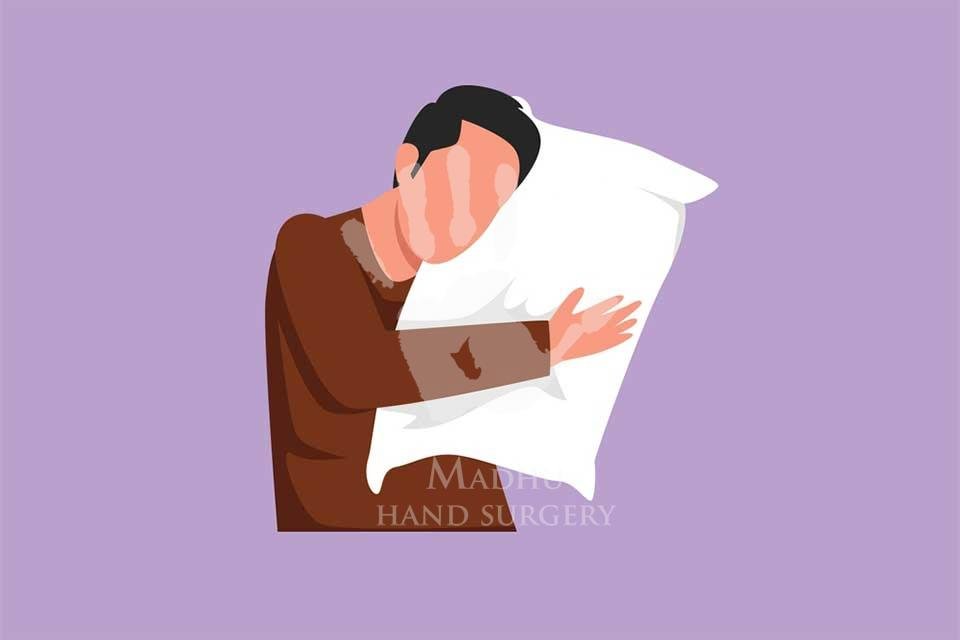
4) Side Sleeping with a Pillow Hug (Upper Body Support)
If your upper shoulder collapses forward, it twists your spine and can worsen Hip/Back Pain.
How to do it:
- Side sleep with a pillow between knees.
- Hug a pillow to keep your chest open and spine aligned.
Best for: combined neck + back pain, mid-back stiffness, posture-related pain.
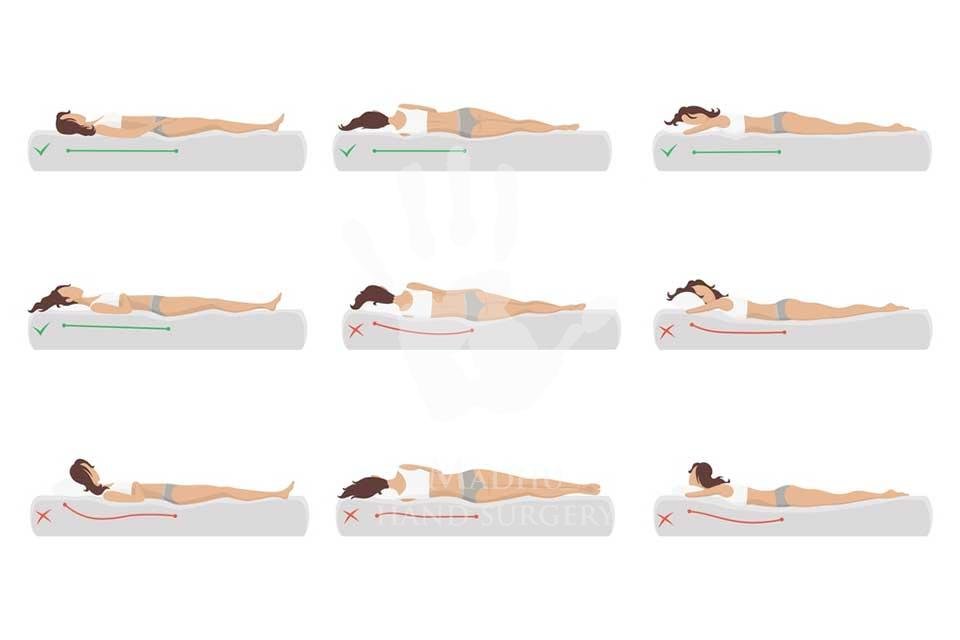
5) What to Avoid: Stomach Sleeping (Usually the Worst for Hip or Back Pain)
Stomach sleeping typically increases lower back arching and forces neck rotation. For many patients, it aggravates Hip/Back Pain, morning stiffness, and nerve irritation.
If you can’t stop stomach sleeping:
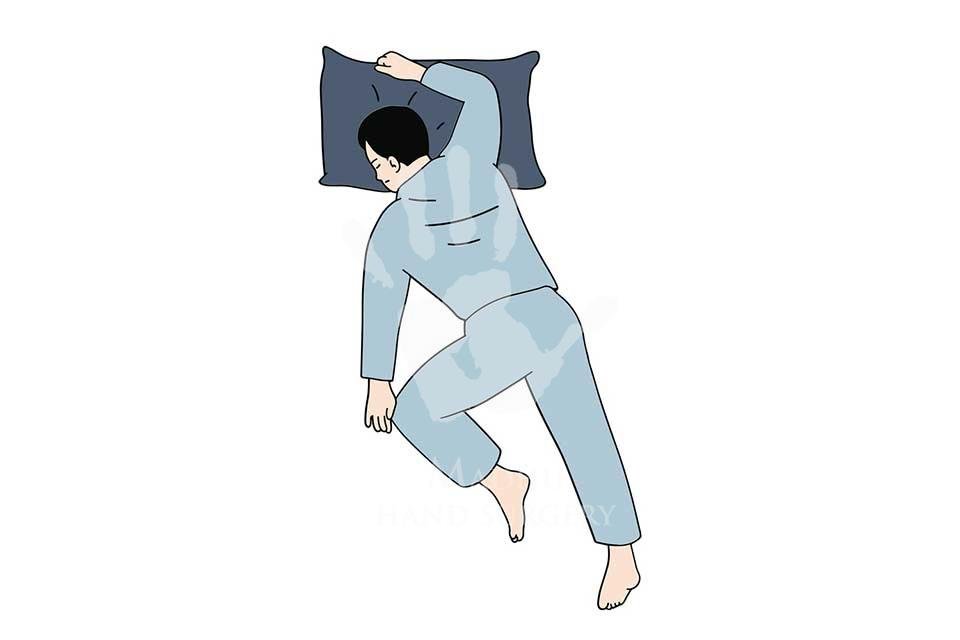
- Put a thin pillow under your pelvis/lower abdomen.
- Use a very thin pillow under the head or none.
Pillow + Mattress Setup That Makes Positions Work
Sleep posture is only half the equation. The wrong mattress can undo even the best sleeping position.
Pillow recommendations
- Between knees: medium-firm pillow to keep hips aligned
- Under knees: thicker pillow to reduce lumbar strain
- Head pillow: neck should stay neutral, not tilted up or down
Mattress recommendations
- Too soft: hips sink, spine bends → worsens Hip/Back Pain
- Too hard: pressure points increase → hip pain increases
- Ideal: medium-firm with good support for pelvis and shoulders
If you’re unsure, an evaluation by an orthopedic specialist can help determine whether your pain is joint-related, nerve-related, or muscular—each benefits from a different setup.
5-Minute Bedtime Routine to Reduce Hip or Back Pain at Night
Try this gentle routine daily (stop if pain shoots down the leg or increases sharply):
- Knee-to-chest stretch (gentle) – 20 seconds each side
- Piriformis stretch – 20 seconds each side
- Hamstring stretch (light) – 20 seconds each side
- Warm pack on lower back/hip – 10 minutes
- Slow breathing – 1 minute to reduce muscle guarding
These steps can reduce muscle tightness and help you stay in the best position for Hip/Back Pain relief.
When Hip or Back Pain at Night Is a Warning Sign (See an Orthopedic Specialist)
Consult an ortho surgeon or bone specialist if you have:
- Pain radiating below the knee with numbness/tingling
- Weakness in foot/leg
- Pain after a fall or injury
- Fever, unexplained weight loss, or night sweats
- Pain that wakes you consistently for weeks
- Hip pain with limping or reduced range of motion
Early diagnosis prevents chronic problems. If you’re searching for the best bone doctor to evaluate persistent Hip/Back Pain, it’s important to choose someone who focuses on accurate assessment, imaging guidance when needed, and non-surgical options before surgery.

About Dr. Madhusudhan NC (Madhuhand Surgery)
Dr. Madhusudhan NC is a consultant orthopedic specialist at Bangalore Baptist Hospital and practices at Madhuhand Surgery, helping patients with bone, joint, spine, and sports-related conditions. If you need guidance for persistent Hip/Back Pain, posture-related issues, or recurring night pain, an evaluation can identify whether the cause is muscular strain, disc/nerve irritation, arthritis, or hip joint pathology—and the treatment can be tailored accordingly by an experienced ortho surgeon and bone specialist.
FAQs (People Also Ask)
1) Is it better to sleep on the side or back for Hip/Back Pain?
Both can help. Side sleeping with a pillow between knees and back sleeping with a pillow under knees are two of the best options.
2) Why does Hip/Back Pain get worse when I lie down?
Poor alignment, disc pressure, muscle tightness, or nerve irritation can worsen when the spine and hips are unsupported.
3) Can a pillow between the knees really help?
Yes—because it reduces hip rotation and keeps the spine aligned, often reducing Hip or Back Pain significantly.
Book a Consultation (Bangalore)
If you’re dealing with daily Hip or Back Pain and sleep is affected, consult Dr. Madhusudhan NC—orthopedic specialist, bone specialist, and ortho surgeon (Madhuhand Surgery | Bangalore Baptist Hospital). Correct diagnosis + correct positioning can make a major difference.
Clinic Details & Appointment
Madhu Hand Surgery & Orthopaedic Centre
#115, 11th Main Road, 4th Cross, Coffee Board Layout,
Hebbal Kempapura, Bangalore – 560024
Call for Consultation: 7899399839
Consultation Timings: Monday to Saturday, 6:30 PM – 8:30 PM